
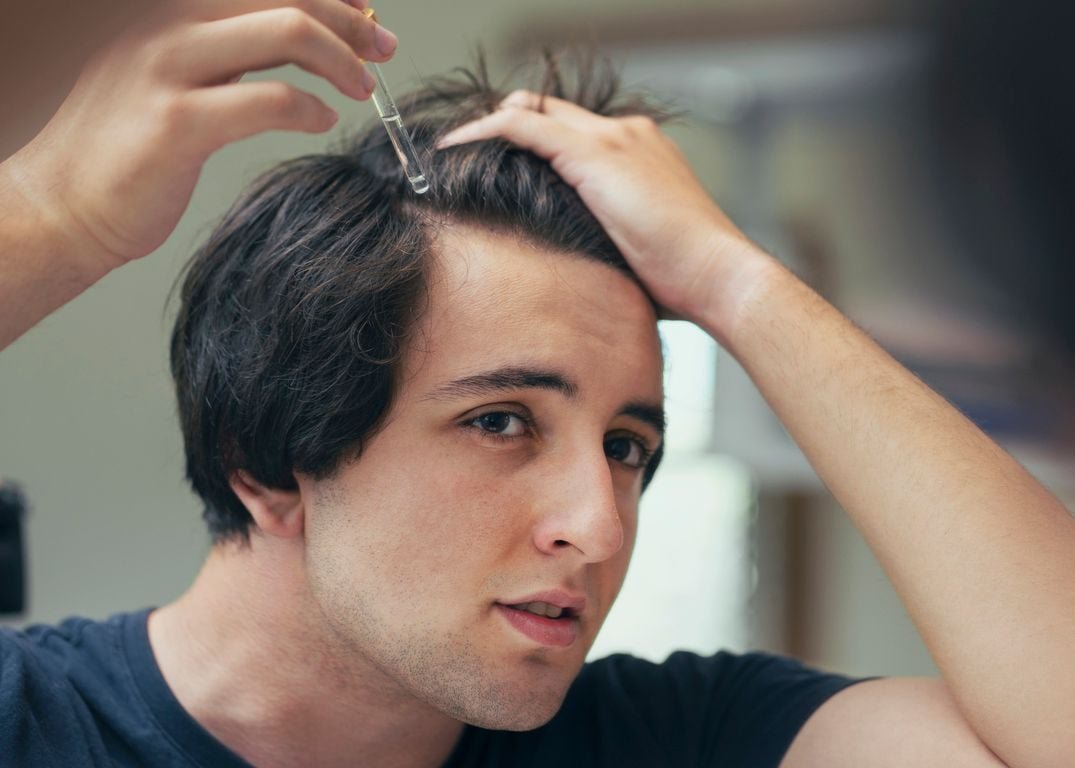
Hair regrowth for men: 10 tips to regrow thinning hair

This article was reviewed by Darragh O’Carroll, MD.
Hair Regrowth for Men: Ways to Regrow Thinning Hair
Key takeaways:
- Hair regrowth for men is possible with FDA-approved medications and the support of good hair care habits.
- Finasteride and minoxidil are the most effective options.
- You’ll want to figure out what’s causing hair loss first — a healthcare provider can help with that.
“How to regrow thinning hair male” and “hair regrowth for men” are popular search terms — understandably so, when you look at the stats.
Maybe you’re older and starting to see more of your scalp than you’d like. Or perhaps you’re a younger guy noticing more hair fall down the drain each morning. An estimated 30 to 50 percent of men experience male pattern baldness by age 50, so there’s a good chance you’ll deal with it at some point.
If you’re seeing early signs of balding, you might wonder, Is it possible for men to regrow hair? And if so, how can I regrow thinning hair? There’s more than one best way to regrow hair — in fact, we know of 10 useful strategies.
Is It Possible for Males to Regrow Hair?
The big questions at hand: Can hair grow back? Is it possible to regrow hair when dealing with a slew of factors that affect hair loss? Yes, but let’s back up a bit and explain how hair grows, what causes hair to fall out, and the different types of hair loss.
The hair growth cycle consists of three phases:
- Anagen (growth)
- Catagen (transitional)
- Telogen (resting)
At any given time, 85 to 90 percent of hair follicles on your head are in the active growth (anagen) stage, which lasts two to six years.
There are, on average, around 100,000 hairs on your head, and you’re bound to lose at least a few of them every day. In fact, losing as many as 100 hairs a day is typical. But when more hair strands are falling out, it might be time to talk to a medical professional.
Why Hair Loss in Men Happens
Hair loss can happen for various reasons, from genetic conditions to infections and even severe stress. Common causes of hair loss in men include:
- Male pattern baldness. The most common cause of permanent hair loss in men is male pattern baldness (or androgenetic alopecia). Genetic factors and the hormone dihydrotestosterone (DHT) are mostly to blame. This type of hair loss can be treated with medications like minoxidil or finasteride.
- Severe or chronic stress. Stress can cause a form of temporary hair shedding called telogen effluvium, when hairs abruptly fall out en masse due to a disruption in the hair growth cycle. Hairs will usually regrow once stress levels are normal.
- Poor diet. Although dietary issues don’t cause permanent hair loss, certain nutritional deficiencies can contribute to telogen effluvium. For example, a low protein intake or a lack of iron can cause temporary hair shedding.
- Medical conditions. Sometimes, hair loss can develop due to health conditions like thyroid disease, autoimmune diseases, or fungal scalp infections. Alopecia areata is an autoimmune disease that attacks hair follicles, causing damage and eventually stopping growth.
- Tight hairstyles. Finally, hair loss can develop as a result of hairstyles that pull on hair follicles. Some styles, such as dreadlocks or braids, can even contribute to a form of permanent hair loss called traction alopecia. This isn’t usually permanent and can typically be reversed with looser styling.
The main difference between telogen effluvium and androgenetic alopecia is that telogen effluvium is temporary, and androgenetic alopecia isn’t.
Knowing what’s causing excess shedding and which type of hair loss you might be dealing with can help you find the right hair loss treatment.
10 Tips to Regrow Hair for Men
There’s no single best way to regrow hair simply because the best way to treat hair loss can depend on what’s causing it.
Having said that, these approaches to hair regrowth for men can make a big difference:
- Using hair loss medication
- Being mindful of diet
- Reducing stress
- Improving hair care
- Avoiding damaging hairstyles
- Considering scalp reduction or a hair transplant
- Microneedling
- Low-level light therapy (LLLT)
- Scalp massage
- Essential oils
These methods can help improve overall hair health and reduce the possibility of hair loss. You can even use multiple strategies together to optimize results.
1. Use Hair Loss Medication
If you’re looking for science-backed hair regrowth treatments that are clinically proven effective in reducing hair loss, medication is your best bet.
The Food and Drug Administration (FDA) has approved two medications to reduce hair loss.
One is finasteride, an oral medication, and the other is minoxidil, a topical treatment. Topical minoxidil is available over the counter, while finasteride is a prescription medication.
Finasteride
Finasteride (generic Propecia®) works by preventing testosterone from being converted into DHT — that’s the hormone that causes genetic hair loss.
Taking finasteride on a daily basis has been shown to reduce DHT levels by about 70 percent. In many cases, that’s enough to slow down the effects of male pattern baldness and potentially stop further hair loss.
Minoxidil
Though the exact ways topical minoxidil (generic for Rogaine®) works aren’t fully understood, this solution is thought to extend the hair’s growth phase and promote blood flow to the scalp.
This medication comes in the form of minoxidil foam or a liquid solution. It’s applied twice a day directly to the areas of your scalp where you see hair thinning.
You can also try a combination of topical finasteride & minoxidil spray to treat hair loss and regrow new hair.
2. Be Mindful of Your Diet
You are what you eat, and what you eat may impact your ability to grow strong, healthy hair.
A healthy diet alone can’t fully reverse hair loss, but research suggests certain vitamins and minerals may play a role in hair growth.
Eating nutritious foods full of vitamins, minerals, and macronutrients is never a bad idea. That said, there’s a general lack of strong research on the effects of food and multivitamin supplements as hair loss treatments.
If you think not-so-good eating habits may be the cause of your hair loss, consider reducing your intake of processed foods and increasing your vitamin intake — particularly vitamin A, vitamin C, and biotin.
You can even make hair growth tasty with biotin gummies to support healthy hair.
To improve hair health, try eating more:
- Avocados
- Eggs
- Fatty fish
- Leafy greens
- Lean protein
- Nuts and seeds
Foods rich in protein, iron, and healthy fats may benefit hair, as there’s a connection between a lack of these nutrients and hair loss.
3. Reduce Stress
Stress affects not only your mental health but also your physical health — possibly including your hair.
What we’re trying to say is, stress hair loss is a thing. High stress levels can cause or worsen telogen effluvium, the temporary form of hair loss we mentioned earlier.
Androgenetic alopecia often results in permanent hair loss around the hairline, temples, and the crown of the scalp. Telogen effluvium is more subtle, with increased hair shedding and overall thinning hair.
If you’re struggling with the one-two punch of anxiety and hair loss and noticing more hair strands than usual on your pillow, try using relaxation techniques, exercise, and other lifestyle changes to reduce stress.
4. Improve Your Hair Care
While taking better care of your hair may not make your hairline grow back, implementing certain hair care tips could result in a fuller head of hair.
The American Academy of Dermatology Association (AAD) suggests washing oily hair or dandruff-prone hair more frequently and only using shampoo on the scalp. Be sure to use conditioner after every shampoo, concentrating on the ends of your hair.
You can take your hair care a step further and use shampoo and conditioner specifically formulated for your hair type.
Or look for formulas with ingredients that can help promote fullness and the look of hair density.
You should also avoid habits that damage hair, such as brushing hair when wet (in its weakest state), frequent blow-drying, or using a flat iron.
5. Avoid Damaging Hairstyles
If you constantly wear your hair in a tight man bun, we won’t judge you. But you might end up dealing with traction alopecia.
Consider switching to a looser style that doesn’t put extra pressure on your hair follicles. Besides that, if you style your hair using products containing harsh chemicals, try to reduce the amount you use.
6. Consider Scalp Reduction or a Hair Transplant
Scalp reduction surgery is a hair restoration procedure that removes parts of the scalp affected by hair loss and replaces them with skin that contains active, growing hair follicles.
Those with enough hair on the sides and back of their scalp may be good candidates for this type of surgery.
Other surgical options for hair loss include hair transplant surgery. A hair transplant takes hair from the areas of your scalp not affected by male pattern baldness and moves it to thinning or bald areas.
7. Try Microneedling
Another option for hair loss is microneedling. This treatment involves making small pinpoints on the scalp to stimulate hair follicles and promote hair growth.
The method is similar to dermarolling, which works by creating tiny holes and may help slow hair loss.
8. Look Into Low-Level Light Therapy
Low-level light therapy (LLLT) uses a light frequency that stimulates hair follicles to return them to the anagen phase of the hair growth cycle, where active growth happens.
A 2013 study found that LLLT was effective in treating several types of non-scarring alopecia, including:
- Androgenic alopecia
- Alopecia areata
- Chemotherapy-induced hair loss
With consistent, ongoing use, an at-home laser hair growth cap or a red-light headband might help treat hair loss. You can also look into in-office treatments, but these will be more expensive.
9. Try Scalp Massage
If you’ve looked up “how to regrow thinning hair male,” certain websites may have directed you to hair tools like scalp massagers. Scalp massage might encourage hair regrowth for men for those noticing bald spots or thinner hair.
One study of over 320 men with androgenetic alopecia found that scalp massages encouraged hair regrowth in some people. But it’s worth noting that this study relied on self-assessment, meaning the participants reported on what they thought their hair improvements were.
10. Try Essential Oils
So, you can’t expect to turn on an essential oil diffuser and see a full head of hair by morning. But applying certain oils topically might stimulate the scalp and boost hair growth.
Essential oils that may support hair growth:
- Pumpkin seed oil
- Rosemary oil
- Lavender oil
- Peppermint oil
How to Regrow Hair: Final Thoughts
After Googling “how to regrow thinning hair male,” these are the main takeaways to remember about encouraging hair regrowth for men:
- Hair loss and a receding hairline can be caused by several factors, from poor diet and chronic stress to medical conditions and genetics.
- These factors can lead to different types of hair loss, such as androgenetic alopecia (male pattern baldness), telogen effluvium, and traction alopecia.
- Is it possible to regrow hair? Yes, depending on what’s causing your hair loss. Using medication, eating nutritious foods, reducing stress, and improving hair care habits can make a difference.
- Those interested in science-backed, FDA-approved hair regrowth treatments should consider oral finasteride or topical minoxidil.
When in doubt, consult a dermatologist, trichologist, or another medical professional.
If you’re experiencing hair loss and want to regain both your hair and your confidence, you can connect with a healthcare provider to learn about more FDA-approved and science-backed hair loss treatments.
- Related: 12 Best Minerals and Vitamins for Hair Growth
- Related: Finasteride
Like MediaFeed’s content? Be sure to follow us.
This article originally appeared on Hims.com and was syndicated by MediaFeed.org.