Latest Breast Cancer Treatment Options 2025 –
Introduction
Breast cancer treatment has come a long way over the past decade, and 2025 marks another milestone in medical innovation. With new technologies, personalized medicine, and targeted therapies, breast cancer patients today have more effective and less invasive treatment options than ever before. These advancements not only improve survival rates but also enhance quality of life during and after treatment.
In this article, we’ll explore the latest breast cancer treatment options in 2025, focusing on the most recent developments, therapies, and holistic care approaches that are transforming how we fight this disease.
1. Personalized Medicine: Tailoring Treatment to the Individual
One of the biggest breakthroughs in 2025 is the rise of personalized or precision medicine. Rather than relying on a “one-size-fits-all” treatment plan, doctors now use genetic testing and molecular profiling to tailor treatments to each patient’s unique cancer type.
Through genomic sequencing, oncologists can identify mutations in cancer cells and choose targeted therapies that specifically attack those mutations. This approach increases the effectiveness of treatment while reducing side effects.
For instance, patients with HER2-positive breast cancer now have customized targeted therapies that block the HER2 protein’s growth signals more precisely than before. Similarly, for hormone receptor-positive cancers, treatments are now fine-tuned to match the patient’s hormonal profile.
2. Immunotherapy: Boosting the Body’s Natural Defenses
Immunotherapy continues to be one of the most exciting frontiers in breast cancer treatment. In 2025, newer immunotherapy drugs are showing promising results for patients who previously had limited treatment options.
Immunotherapy works by activating the immune system to recognize and attack cancer cells. Recent FDA-approved drugs like checkpoint inhibitors and CAR-T cell therapy are giving patients with advanced or triple-negative breast cancer renewed hope.
Researchers are also testing combination therapies—using immunotherapy alongside chemotherapy or radiation—to boost effectiveness and help patients achieve longer remissions.
3. Targeted Drug Therapies: More Precision, Fewer Side Effects
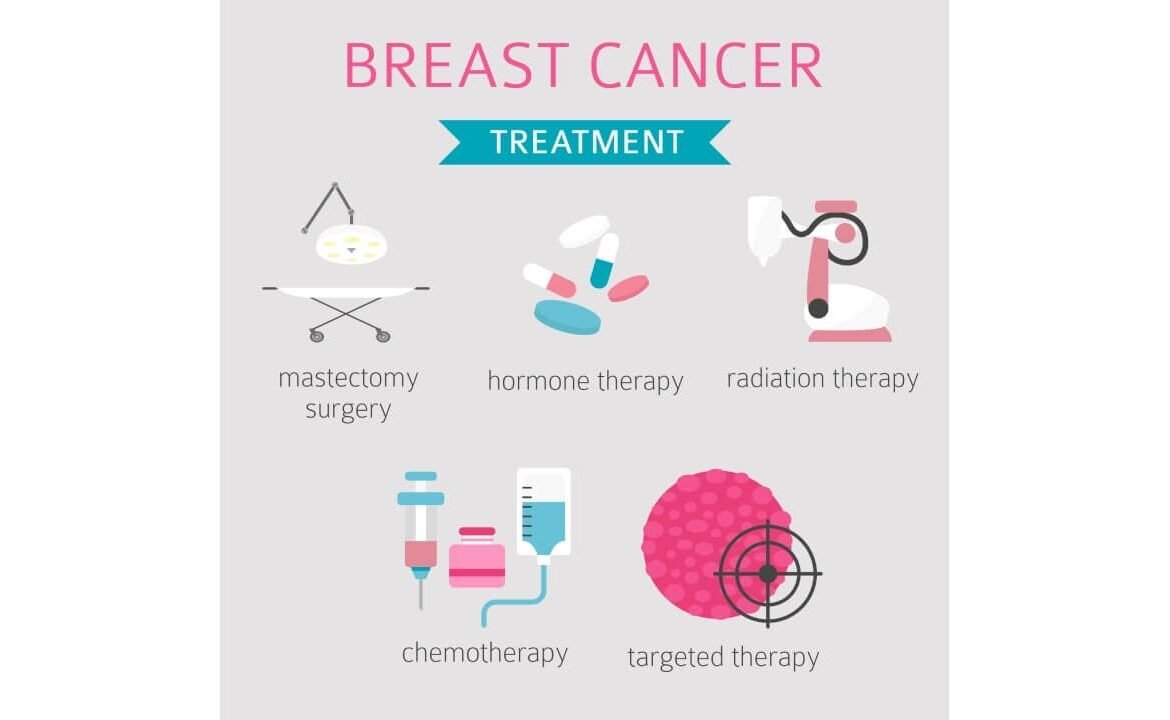
Targeted drug therapy is one of the most advanced methods in 2025. Unlike traditional chemotherapy, which kills both healthy and cancerous cells, targeted drugs attack only specific molecules involved in cancer growth.
New generations of PARP inhibitors, CDK4/6 inhibitors, and PI3K inhibitors are helping patients with genetic mutations like BRCA1 or BRCA2 live longer with fewer side effects.
For example:
-
Olaparib and Talazoparib have been enhanced to work effectively in earlier stages of breast cancer.
-
CDK4/6 inhibitors such as Palbociclib are being used successfully in hormone receptor-positive breast cancers.
These treatments represent a shift toward smarter, more efficient cancer management.
4. Advancements in Radiation Therapy
In 2025, radiation therapy has become significantly safer and more precise thanks to innovations in imaging and AI-based targeting. Techniques like proton beam therapy and intraoperative radiation therapy (IORT) deliver radiation directly to the tumor site, minimizing exposure to surrounding healthy tissue.
AI and machine learning tools are also being used to plan radiation doses based on each patient’s anatomy, reducing side effects such as fatigue and skin irritation.
Additionally, shorter radiation schedules—sometimes just one week long—are now an option for early-stage breast cancer patients, making the treatment process more convenient and less stressful.
5. Surgical Innovations: Less Invasive, Faster Recovery
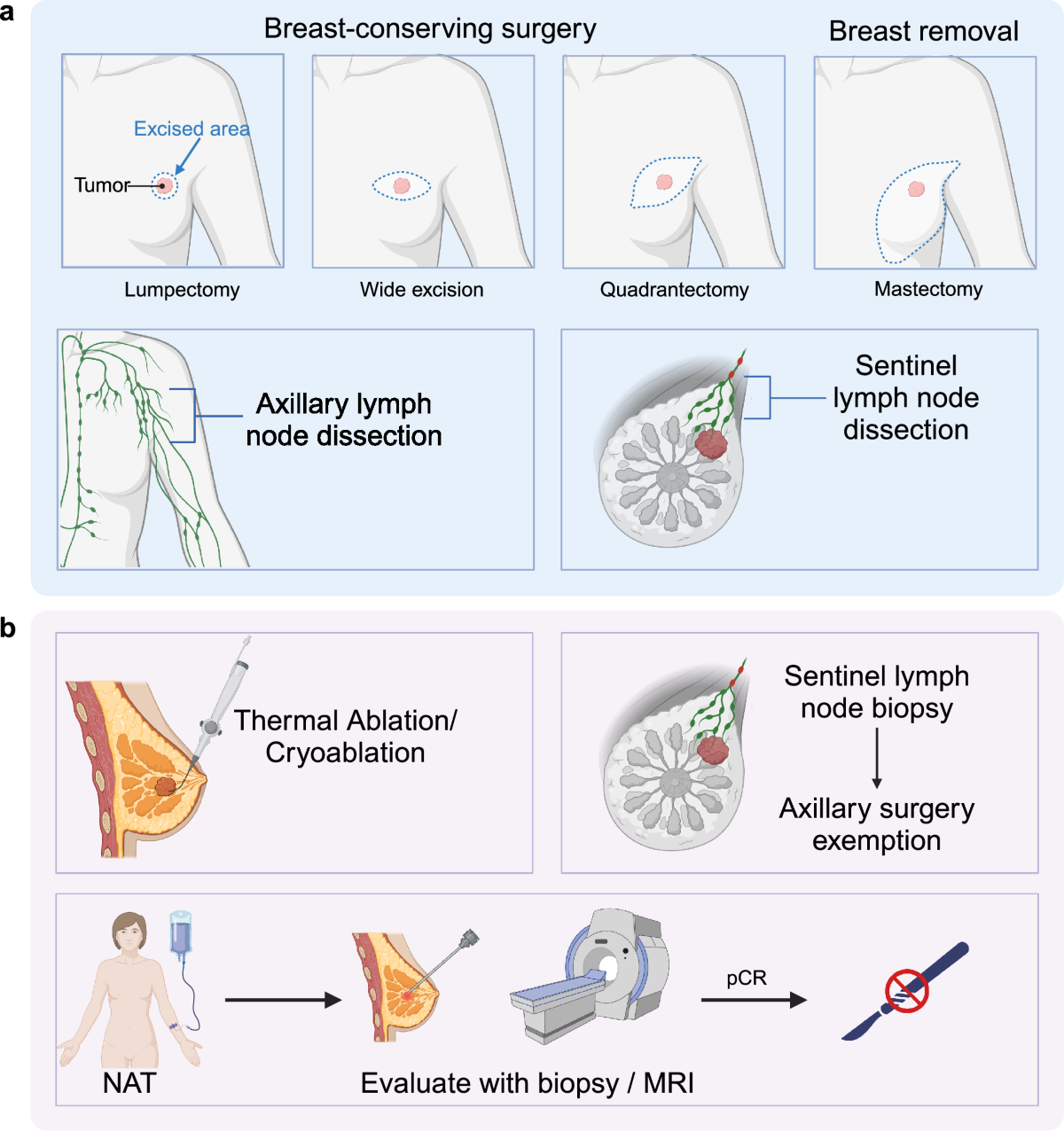
Surgical treatment for breast cancer has evolved tremendously. In 2025, minimally invasive surgeries and reconstructive advancements are helping patients recover faster and maintain their body confidence.
New techniques like robot-assisted lumpectomy allow surgeons to remove tumors with high precision, reducing scarring and preserving more healthy breast tissue. Furthermore, nipple-sparing mastectomies and 3D-printed breast implants are improving aesthetic outcomes for women undergoing reconstruction.
The integration of real-time imaging during surgery also ensures that cancerous tissues are completely removed while minimizing damage to surrounding areas.
6. Hormone Therapy: Smarter Control for Hormone-Driven Cancers
For patients with estrogen or progesterone receptor-positive breast cancers, hormone therapy remains a cornerstone of treatment. The difference in 2025 is that it’s more refined and adaptive.
New drugs like selective estrogen receptor degraders (SERDs) offer better control over hormone activity and reduce resistance over time. AI-driven hormone monitoring also helps doctors adjust dosages in real-time, ensuring maximum benefit with minimal side effects.
7. Artificial Intelligence in Diagnosis and Monitoring
Artificial intelligence (AI) has transformed breast cancer care from diagnosis to follow-up. In 2025, AI algorithms assist radiologists in detecting breast tumors earlier through AI-powered mammography and ultrasound imaging.
AI systems can now analyze pathology slides faster and with higher accuracy than before, identifying aggressive cancers and predicting their response to different treatments.
In addition, wearable devices and AI-based health monitoring apps track recovery progress, helping patients stay on top of their treatment schedules and side effects from home.
8. Integrative and Supportive Therapies
Modern breast cancer care now focuses not only on curing the disease but also on improving overall well-being. Integrative oncology, which combines conventional treatments with complementary therapies like acupuncture, yoga, meditation, and nutritional counseling, has gained immense popularity in 2025.
These therapies help manage stress, boost immunity, and improve mental health, ensuring that recovery is both physical and emotional.
9. Clinical Trials: Access to the Future of Cancer Care
Another major development in 2025 is easier access to clinical trials through digital platforms. Patients can now enroll online and even participate remotely, gaining access to experimental drugs and advanced therapies.
Clinical trials are vital for bringing new drugs and treatment methods to the market. They also give patients who’ve exhausted standard options a chance at life-changing results.
Conclusion: A Future Full of Hope
The landscape of breast cancer treatment in 2025 is filled with innovation, precision, and compassion. With personalized therapies, AI-powered diagnostics, and integrative care, patients have more control and hope than ever before.
The journey against breast cancer is still ongoing, but science is moving faster than ever. Every new discovery brings us closer to a world where breast cancer is not a life sentence—but a treatable, manageable condition.